A video and inquiry report have raised questions about the Delhi Fire Services' claim that no cash was found at the official residence of Delhi High Court judge Justice Yashwant Varma during a fire incident on March 14. The video, which has gone viral on social media, shows fire fighters dousing flames on articles that appear to include half-burnt Indian currency notes. The Delhi High Court Chief Justice has initiated an in-house inquiry against Justice Varma and the Supreme Court has proposed his transfer to the Allahabad High Court.

'They might not have liked his judgments on IT rules, the Election Commission and Pondicherry.'

'The (Collegium system of appointing judges) is absolutely whimsical.'

'We have already prejudged the issue. And now things have reached a point where it is very difficult for a person to say that he could be innocent.'
A plea in the Supreme Court of India seeks a direction to Delhi Police to lodge an FIR over the alleged discovery of semi-burnt stash of cash from the official residence of Delhi High Court judge Yashwant Varma. The plea challenges a 1991 judgement that prohibits criminal proceedings against judges without prior consent from the Chief Justice of India, arguing it violates the principle of equality before the law. It also seeks to declare the collegium's 3-member committee investigating the incident as having no jurisdiction and calls for action against corruption within the judiciary.

The Supreme Court has dismissed a Public Interest Litigation (PIL) seeking the registration of an FIR over the alleged discovery of burnt wads of cash at the official residence of Delhi High Court judge Yashwant Varma. The court said an in-house inquiry was underway and there would be several options open to the Chief Justice of India after the probe's conclusion.

The five-member Collegium, headed by Chief Justice of India Dipak Misra, said that there was 'nothing adverse' regarding suitability of Justice Joseph.
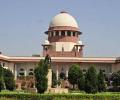
The Supreme Court on Thursday said there was no bar on the collegium to go ahead with its work to appoint judges for the higher judiciary, which is plagued with large-scale vacancies.
A three-judge panel appointed by the Supreme Court of India has submitted its inquiry report to the Chief Justice of India on the cash discovery allegations against Allahabad High Court judge Justice Yashwant Varma. The panel, comprising Justice Sheel Nagu, Justice G S Sandhawalia, and Justice Anu Sivaraman, finalized its report on May 3. The report was submitted to the CJI on May 4 for further actions. The controversy was raised following a news report about the cash discovery row after a fire at Justice Varma's residence in Delhi on March 14. The report reportedly contains the findings of the panel into the alleged cash discovery row. Justice Varma has denounced any insinuation and said no cash was ever placed in the storeroom either by him or any of his family members.
Rijiju also said the Centre respects judiciary as its independence is "absolutely necessary" for a thriving democracy.

'The collegium system will remove any such doubts from the minds of people and the political parties.'
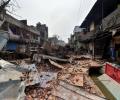
Delhi high court judge Justice S Muralidhar was on Wednesday transferred to the Punjab and Haryana high court. A government notification about the transfer was issued on Wednesday which said that after consultation with Chief Justice Sharad Arvind Bobde, President Ram Nath Kovind on Wednesday transferred Justice S Muralidhar, judge of the Delhi high court, as judge of Punjab and Haryana high court. The notification further said the President has directed Muralidhar to assume charge of his office in Punjab and Haryana high court.

The Supreme Court on Wednesday came down heavily on Manipur high court judge Justice MV Muralidaran, saying despite being granted an opportunity he did not correct his judgment on grant of quota to the majority Meiteis in the strife-torn state.

The collegium has recommended to the Centre to appoint justices N H Patil and D K Gupta as the chief justices of the Bombay and Calcutta high court.

Justice Bobde, 63, also rued the criticism of judges on social media for their judicial actions and said most of the judges, who are not "thick skinned", get perturbed.

The Supreme Court, which had on February 7 refused to entertain two pleas seeking to restrain Lekshmana Chandra Victoria Gowri from taking oath as an additional judge of the Madras high court, on Friday pronounced the reasons for the dismissal of the petitions.
The Supreme Court of India has released an inquiry report into the alleged discovery of a large amount of cash at the residence of Delhi High Court judge Yashwant Varma. The report, which includes photos and videos, was uploaded on the court's website. Chief Justice of India Sanjiv Khanna has formed an in-house committee to investigate the matter and has asked the Delhi High Court Chief Justice to not assign any judicial work to Justice Varma. Justice Varma has denied the allegations, claiming they are part of a conspiracy to frame him. The inquiry report, submitted by the Delhi High Court Chief Justice, has been made public and calls for a deeper probe into the incident. The incident has raised concerns about judicial accountability and has prompted the Congress party to call for strong measures to uphold public trust in the judiciary.
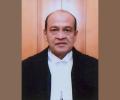
The 56-year-old judge, enrolled as an advocate in 1992, was appointed as an additional judge of the Allahabad high court on October 13, 2014 and took oath as a permanent judge of that court on February 1, 2016.

A section of the Madras high court Bar Association has opposed the Supreme Court collegium's recommendation to elevate advocate Lekshmana Chandra Victoria Gowri for judgeship at the Madras HC and demanded her recall.
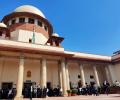
In an unprecedented development, the Supreme Court Collegium has made public the names of the two judges on the panel who objected to the method of 'circulation' adopted for eliciting the views of its members on the appointment of judges to the apex court.
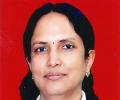
Last month, the Supreme Court collegium had withdrawn its approval to a proposal for the appointment of additional judge, Justice Ganediwala as a permanent judge of the court following her two controversial verdicts.

In an unprecedented decision, the Supreme Court Collegium has recommended the names of three women judges for appointment in the apex court which, if cleared, would give the country its first woman Chief Justice of India (CJI) in the form of Justice B V Nagarathna on February 10, 2027.
In a first, the Supreme Court Collegium had last week recommended for appointment to the apex court three women judges, including Justice B V Nagarathna who will be in line to be the first woman Chief Justice of India (CJI) in September 2027 if she gets the final nod.
There is a need to think about the collegium system so that appointments in higher judiciary can be accelerated," Rijiju said.

Her resignation has been accepted with effect from September 6, it said.
The SC collegium had in 2016 recommended names of Harnaresh Singh Gill and Mohammed Nizamuddin for appointment as judges of the Punjab and Haryana high court and the Calcutta high court respectively.

The CJI's announcement made in the apex court assumes significance in the wake of Union Law Minister Kiren Rijiju's statement in Rajya Sabha on Thursday in which he said there was a feeling among the people that long court vacations were not very convenient for justice seekers.

Outgoing Chief Justice of India BR Gavai defends the Supreme Court's verdict on governors' powers, emphasizing the principle of separation of powers and judicial independence.

In January, the Supreme Court Collegium had reiterated its November 11, 2021 recommendation for appointing Kirpal as a judge of the Delhi high court, rejecting the Centre's contention that though homosexuality stands decriminalised in India, same-sex marriage is still bereft of recognition.
Justices N Kotiswar Singh and R Mahadevan were on Tuesday elevated as judges of the Supreme Court.
A total of 11 advocates and two judicial officers were on Monday appointed as additional judges in the high courts of Allahabad, Karnataka and Madras.

A row erupted after the Chief Justice of India Ranjan Gogoi-headed five-judge Collegium in a fresh resolution on January 10 recommended the elevation of Justice Dinesh Maheshwari and Justice Sanjiv Khanna to the Supreme Court bypassing the seniority of several judges.

CJI Chandrachud met the delegations in the presence of two other members of the collegium -- Justice SK Kaul and Justice MR Shah.

Opposing the transfer of Madras high court Chief Justice Sanjib Banerjee to Meghalaya, over 200 advocates of the Madras high court have signed a representation to the Chief Justice of India, N V Ramana and the Supreme Court collegium, seeking to reconsider the decision to shift CJ Banerjee.

The Department of Justice in the Union Law Ministry issued separate notifications announcing the appointment of acting chief justice of the Bombay high court Justice Sanjay Vijaykumar Gangapurwala as the chief justice of the Madras high court and Justice Ramesh Deokinandan Dhanuka as the chief justice of the Bombay high court.

'There is one negative thing which has happened very quietly. The position of the election commissioner has been downgraded.'
A bench of Justices S K Kaul and A S Oka also expressed displeasure over the delay in clearing recommendations for transfer of high court judges, calling it a 'very serious issue', and warned that any delay in this matter may result in both administrative and judicial actions which might not be palatable.

'There is one weapon in the government's armoury which impacts the independence of the judiciary, and which has not been affected by the collegium system.' 'It is post-retirement employment with the government. 'This is because some judges -- but not all -- are offered post-retirement employment by the government, and it has often been feared that judges close to retirement might decide cases so as to please the government in order to get a favourable post-retirement position,' says Abhinav Chandrachud.
'As per the provisions under the Constitution of India, Hon'ble President of India has appointed the following Chief Justices of High Courts as Judges of the Supreme Court. My best to them: Rajesh Bindal, Chief Justice, Allahabad HC and Aravind Kumar, Chief Justice, Gujarat HC,' Law Minister Kiren Rijiju tweeted.

The appointments were announced by new Law Minister Arjun Ram Meghwal on Twitter.
